
Understanding the Key to Probate
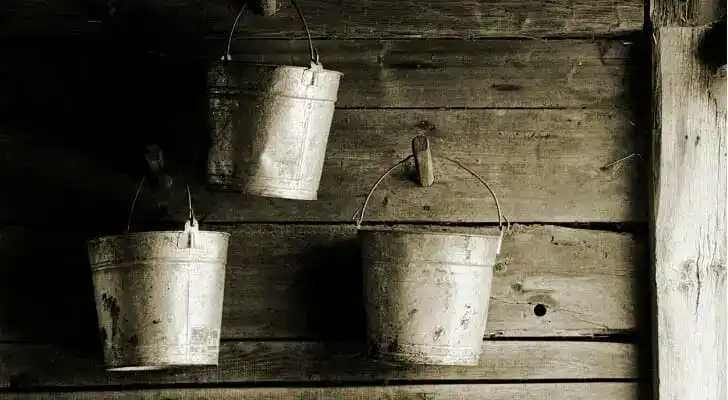
“Buckets of Assets” – the Key to Understanding Probate
The biggest mystery to families in settling a loved one’s affairs, or establishing their own estate plan, is probably understanding what legal document controls the disposition of assets. Most people believe that it is the Last Will and Testament that controls. In reality, the Last Will and Testament is the “catch-all” document and only controls if none of the other “buckets of assets” control. And in fact, if the Last Will and Testament does control, then according to the law, the assets passing thereunder must go thru Probate. This is, in fact, the worst of all “buckets”. In other words, a Last Will has no validity unless it is probated. (the legal definition of probate is “to prove a Will”)
The Will as a “Catch-All” Document
There are many “Will substitutes” which allow assets to pass to loved ones without a Probate. The most common of the “Will substitutes” is a joint tenancy with rights of survivorship. For example, if I owned my house as a joint tenant with my wife, and I made up a Will that leaves the house to my girlfriend, guess who gets the house? Yes, my wife. The right of survivorship feature, by operation of law, passes the asset to my wife regardless of what my Last Will says.
Owning an asset as an “or” is the same as a right of survivorship feature. For example, I own my 1966 Beetle Bug as “Matt or Nancy”. Who gets that when I die? Yes, Nancy does, regardless of what my Last Will says. Does the Beetle pass thru Probate? No. It is a “Will substitute”.
Understanding the “Or” vs. “And” in Asset Ownership
You are learning that the law provides for many ways in which people can avoid probate without a Last Will. The “rights of survivorship feature” is the most common. Now, don’t confuse the “or” with the “and”. If I owned the Beetle Bug as Matt and Nancy, then there is no survivorship feature. We are tenants in common, not “joint tenants”. If I die, my half of the Beetle Bug will go thru probate to my named relatives in the Last Will.
The Beneficiary Designation Bucket
The next “bucket” would be any asset in which the instrument that titles the asset allows me to designate a beneficiary. The most common beneficiary asset would be life insurance. Other assets that allow a beneficiary would be an Annuity, IRAs, Pension Plans, etc. So, what if my Last Will says give all of my assets to my children (assume I am divorced). Yet, I have an old life insurance policy that names my ex-wife as the beneficiary. Who inherits the life insurance? If you guessed my ex-spouse, you are correct. There is always a lot of litigation over beneficiary designations on life insurance policies. Make sure you review them and coordinate them with your Will. These assets also avoid probate and don’t pass according to the Last Will.
The Distinction Between Stocks and IRAs
Only a select few assets allow a beneficiary designation. A stock portfolio with your broker would not. But, an IRA with your broker would. Why the difference? I am not sure, but that is the case.
Real Estate and Beneficiary Deeds
What about real estate? Surprisingly most states, including Arizona now allow for a “Beneficiary Deed”. If my wife and I owned a cabin as joint tenants with rights of survivorship and named our 5 kids as “beneficiaries” if we both died, who would inherit the property at my death? Yes, Nancy would as the surviving joint tenant. What if we were both killed, then yes, our 5 kids would inherit without probate and regardless of what our Last Will says.
Payable on Death (POD) Accounts
Now, let’s look at another bucket of assets. Accounts set up with a POD arrangement. This means “payable on death” and acts like a beneficiary. The most common POD accounts would be bank accounts, CDs, etc. Maybe some stock accounts would allow for a POD. So, let’s assume I am single, and I have 5 kids. I have a Last Will that leaves “all of my estate” to my 5 kids. Yet, when I set up my checking account, I made my daughter the POD for convenience. If I die, I want her to have immediate access to pay my bills. So, I die and my 5 kids read the Last Will and are all smiles. But, my daughter mentions the one account that is POD to only her. Who inherits the POD? Yes, you are correct, my one daughter.
Trust-Titled Assets: Avoiding Probate
The next “bucket of assets” would be things that are titled to a Trust. The Trust would control these assets without a probate and regardless of the Last Will. So, typically, when I set up a Revocable Trust as my estate plan, I usually coordinate my Last Will to “pour into the Trust” at my death. The Will itself doesn’t name beneficiaries. The Last Will is merely a back-up, to catch all assets that I fail to title into the Trust. So, here we go again. I make up a Trust and give my estate to my grandkids. I forgot to change my Last Will that leaves my estate to my children. I die, who inherits? Well, that depends now on how the assets were titled. If they were titled into the Trust, it would control and would pass them to the grandkids. If I failed to title them into the Trust, then the Last Will would control, the assets would pass thru probate, and my children would inherit.
The Power of a Trust as the Major Bucket
If I have a Trust, I should make it the major bucket and title all of my assets into the Trust and avoid all of the other buckets. That is the major beauty of a Trust. It makes it easier to coordinate one bucket instead of five buckets.
Tangible Personal Property: The Final Bucket
Now, the last bucket of assets would be tangible personal property. My jewelry, my guns, fishing poles, artwork, etc. Things that don’t have a title and don’t allow for a beneficiary to be designated, no POD arrangements, etc. Who inherits these things? Well simple, it depends on whether you “assign” them to a Trust. If so, the Trust controls. If not, then they are in the catch-all we mentioned first, the Last Will and Testament. Most Wills allow you to refer to a Personal Property List and you can keep a list, separate from the Will, who you want to inherit the guns and fishing poles.
Coordinating Your Assets: The Key to Probate
You made it through all the buckets. Now you understand that setting up a Will or Trust isn’t the finish line. You must look at where your assets sit and make sure those “buckets” reflect your estate planning wishes. If you’re settling a loved one’s affairs, the key is to list all assets, categorize them into the right buckets, and determine whether probate is needed—and who inherits what.
Need Help with Your Estate Plan?
Whether you’re reviewing your current estate plan, creating one for the first time, or helping to settle a loved one’s affairs, Dana Whiting Law is here to guide you through every bucket. Our experienced team will help you identify and coordinate your assets, reduce probate exposure, and ensure your wishes are carried out clearly and efficiently. Contact us today or email Matt directly at matt.dana@danawhitinglaw.com for a copy of the estate planning spreadsheet developed over 33 years of experience.